
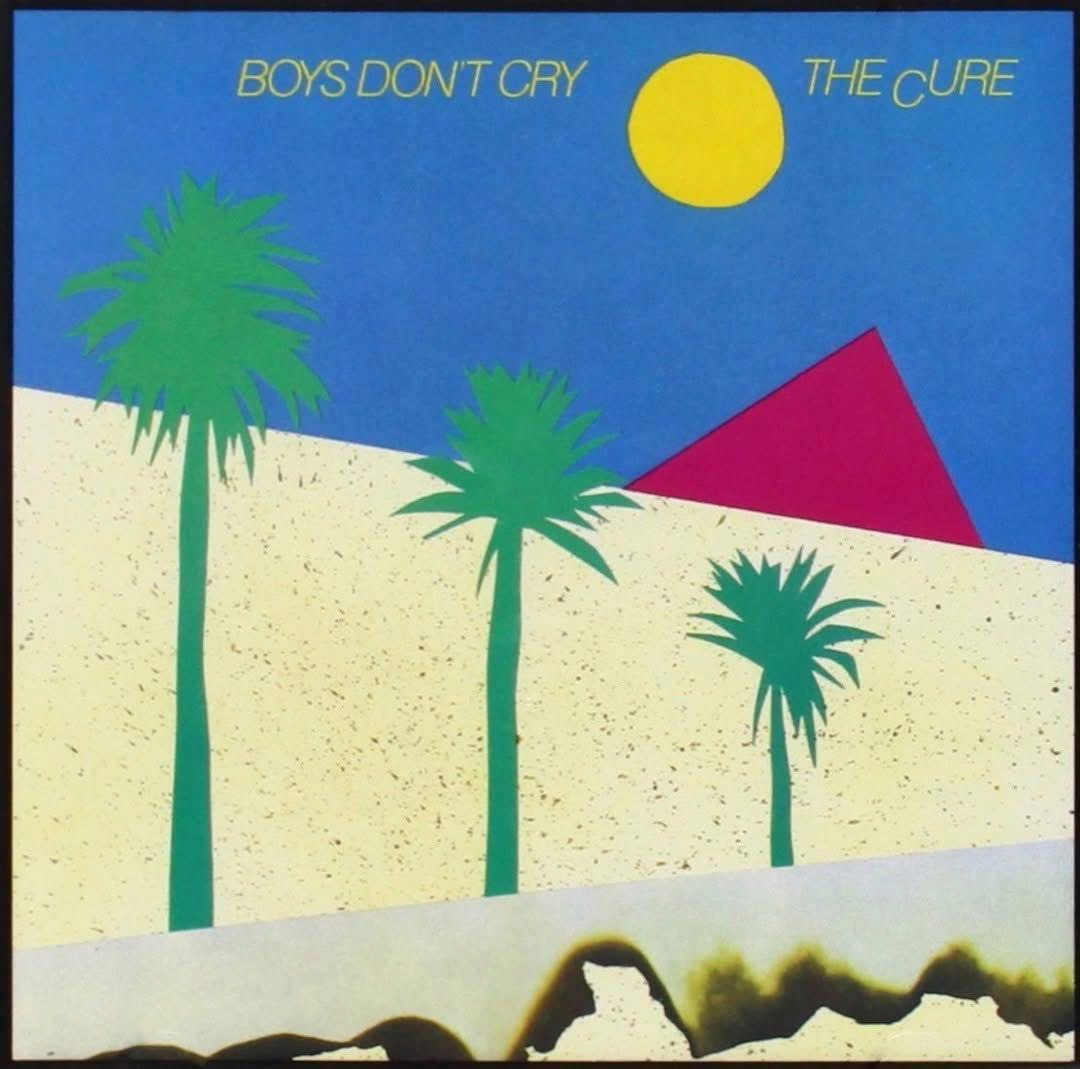
Released on this day in 1980, the compilation helped introduce American audiences to the band’s moody magic
On this day in 1980, The Cure released Boys Don’t Cry, a compilation album that would serve as many listeners’ first real introduction to the band’s haunting, emotional sound. While not a traditional studio album, the record pulled together early singles and tracks from the band’s debut Three Imaginary Boys, reshaping them for the U.S. market and laying the groundwork for The Cure’s rise as one of alternative music’s most influential acts.
At a time when post-punk was evolving into darker, more atmospheric territory, Boys Don’t Cry captured The Cure in their raw, minimalist phase. Songs like “Boys Don’t Cry,” “10:15 Saturday Night,” and “Jumping Someone Else’s Train” balanced shimmering guitar lines with Robert Smith’s aching, youthful vocals. The music was sparse yet emotionally charged, hinting at the gothic depth the band would later fully embrace.
The title track remains one of The Cure’s most enduring songs — an upbeat melody paired with lyrics about heartbreak and emotional repression. Its bittersweet tone perfectly summarized the band’s early appeal: catchy enough for radio, but layered with melancholy beneath the surface. Meanwhile, darker cuts like “Killing an Arab” (inspired by Albert Camus’ novel The Stranger) showed the band’s literary ambitions and willingness to explore unsettling themes.
What made Boys Don’t Cry especially important was its role as a bridge between punk’s urgency and the emerging alternative scene. The album stripped down excess and focused on mood, rhythm, and emotional honesty — elements that would become cornerstones of alternative rock throughout the 1980s and 1990s.
Critically and culturally, the compilation helped The Cure gain traction in the United States, where their early UK releases had seen limited exposure. It wasn’t just a collection of songs — it was a carefully curated snapshot of a young band discovering its voice.
More than four decades later, Boys Don’t Cry still feels fresh. Its clean guitar tones, simple arrangements, and heartfelt performances continue to resonate with new generations of listeners. While The Cure would go on to craft darker epics like Disintegration and pop masterpieces like The Head on the Door, this compilation remains a vital piece of their story.
Released on this day in 1980, Boys Don’t Cry stands as both an introduction and a time capsule — capturing The Cure at the dawn of their journey, when emotion, minimalism, and melody combined to quietly reshape the future of alternative music.
 Transmission with Derek Nester