
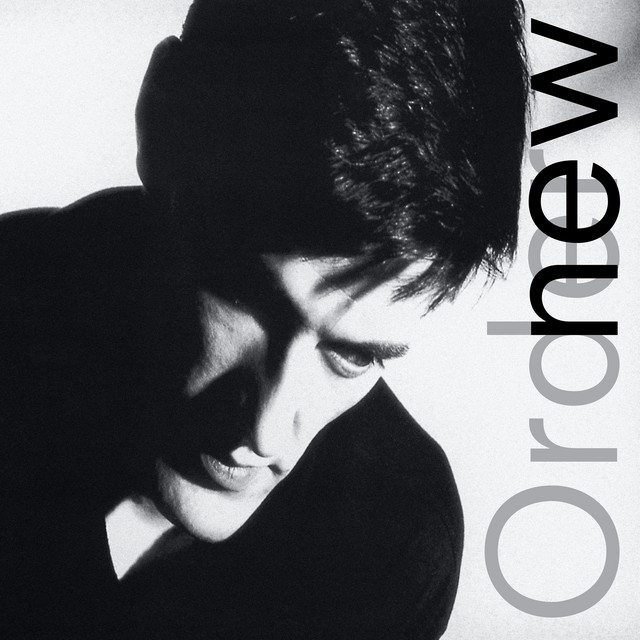
In 1985, New Order released Low-Life, their third studio album and arguably the first where the band fully embraced the synthesis of their post-punk roots with a forward-thinking electronic sound. Following the tragic end of Joy Division and the tentative steps of their early records, Low-Life stands as a defining moment—not only in New Order’s evolution but in the broader history of alternative music.
Clocking in at just over 40 minutes, Low-Life is lean but dense with innovation. It opens with “Love Vigilantes,” a track that immediately subverts expectations. With its bright harmonica intro and country-tinged narrative, it’s perhaps the most lyrically direct song in New Order’s catalogue. Yet even here, synthesizers and sequencers hum just beneath the surface, foreshadowing the sonic palette of what’s to come.
The core of Low-Life lies in the band’s increasingly seamless marriage of machine and man. Tracks like “The Perfect Kiss” and “Sub-culture” are towering synth-pop epics, brimming with kinetic drum programming, sequenced basslines, and icy keyboard riffs, yet anchored by Peter Hook’s melodic bass playing and Bernard Sumner’s emotionally off-kilter vocals. “The Perfect Kiss,” especially in its unabridged 12″ form, feels like a manifesto: sprawling, pulsating, euphoric, and heartbreakingly distant.
What makes Low-Life so compelling is its emotional range. “This Time of Night” and “Sunrise” channel remnants of Joy Division’s bleak introspection, while “Elegia”—a haunting, largely instrumental elegy—offers one of the band’s most cinematic moments, later famously used in Pretty in Pink and Stranger Things. Even amidst the programmed drums and icy synths, there’s a persistent sense of humanity and grief, a ghost that lingers in every beat.
The album’s production, helmed by New Order alongside Stephen Hague and others, marked a refinement of their studio experimentation. It’s not as raw as Power, Corruption & Lies, but it’s sharper, more confident. The technology no longer feels like a novelty or a crutch—it’s intrinsic to the band’s identity.
The original album art—featuring the band members on the cover for the first time—also signaled a new level of self-awareness. For a band so averse to conventional promotion, this felt like a quiet but deliberate declaration: we are here, and we are no longer hiding behind anonymity or the shadow of the past.
In hindsight, Low-Life is a critical bridge between Joy Division’s spectral legacy and the full-blown club anthems of New Order’s later years. It doesn’t have the massive hit singles of Brotherhood or Technique, but it remains one of their most cohesive and artistically potent statements. More than 40 years on, Low-Life still sounds like the future.
Rating: 9/10
Essential tracks: “Love Vigilantes,” “The Perfect Kiss,” “This Time of Night,” “Elegia”
 Transmission with Derek Nester