
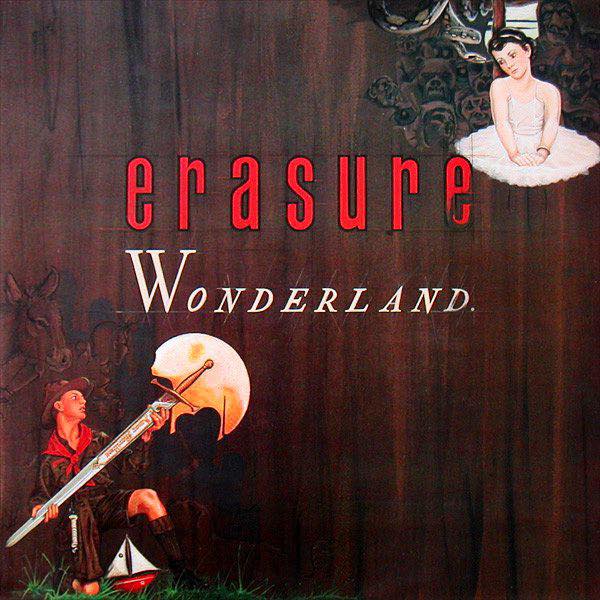
Originally released: June 1986
In the annals of synth-pop, some debuts are merely promising, while others arrive fully formed, bursting with confidence and a clear artistic vision. Erasure’s 1986 debut album, Wonderland, firmly belongs to the latter category. Emerging from the ashes of Vince Clarke’s previous successful ventures (Depeche Mode, Yazoo), Erasure, with the undeniable vocal talent of Andy Bell, wasted no time in establishing their unique identity, delivering an album that was both commercially potent and artistically vibrant.
From the opening pulsating synth lines of “Exodus” to the final melancholic fade of “Say What,” Wonderland is a masterclass in accessible, yet sophisticated, electronic pop. Vince Clarke’s songwriting and production are, as ever, meticulously crafted. His signature blend of intricate melodies, bubbling arpeggios, and propulsive drum machines creates a sonic landscape that is simultaneously futuristic and undeniably catchy.
But the true revelation of Wonderland is Andy Bell. His voice, a soaring, expressive instrument, imbues every track with a unique blend of vulnerability and power. Whether he’s delivering the hopeful yearning of “Cry So Easy,” the defiant joy of “Oh L’amour,” or the introspective questioning of “Pistol,” Bell’s emotive delivery elevates Clarke’s expertly constructed instrumentals from mere pop songs to something genuinely resonant.
The album’s singles, “Who Needs Love Like That” and the iconic “Oh L’amour,” were instant hits, showcasing Erasure’s knack for crafting irresistible pop anthems. “Oh L’amour” in particular remains a cornerstone of their live shows and a beloved synth-pop classic, its infectious chorus and optimistic spirit enduring decades later. However, Wonderland is far from a two-track pony. Deeper cuts like the melancholic “March on Down the Line” with its driving beat and reflective lyrics, and the atmospheric “Reunion” demonstrate the duo’s versatility and willingness to explore slightly darker or more nuanced themes within their synth-pop framework.
While some critics at the time might have dismissed synth-pop as purely manufactured or lacking in “authenticity,” Wonderland disproves such notions with its undeniable heart and soul. It’s an album that perfectly captures the zeitgeist of mid-80s electronic music while simultaneously possessing a timeless quality that allows it to hold up remarkably well today.
Listening to Wonderland in 2025, one is struck by its enduring freshness. The production, while clearly a product of its era, avoids sounding dated thanks to Clarke’s meticulous attention to detail and his uncanny ability to create rich, layered soundscapes. Bell’s vocals remain as captivating as ever, a testament to his unique artistry.
In retrospect, Wonderland wasn’t just a strong debut; it was a mission statement. It laid the groundwork for Erasure’s decades-long career, establishing their signature sound and proving that intelligent, emotionally resonant pop music could be crafted with synthesizers and drum machines. For fans of classic synth-pop or those looking to discover the roots of one of the UK’s most enduring electronic duos, Wonderland remains an essential listen – a dazzling debut that still shimmers with all the brilliance of its initial release.
 Transmission with Derek Nester